
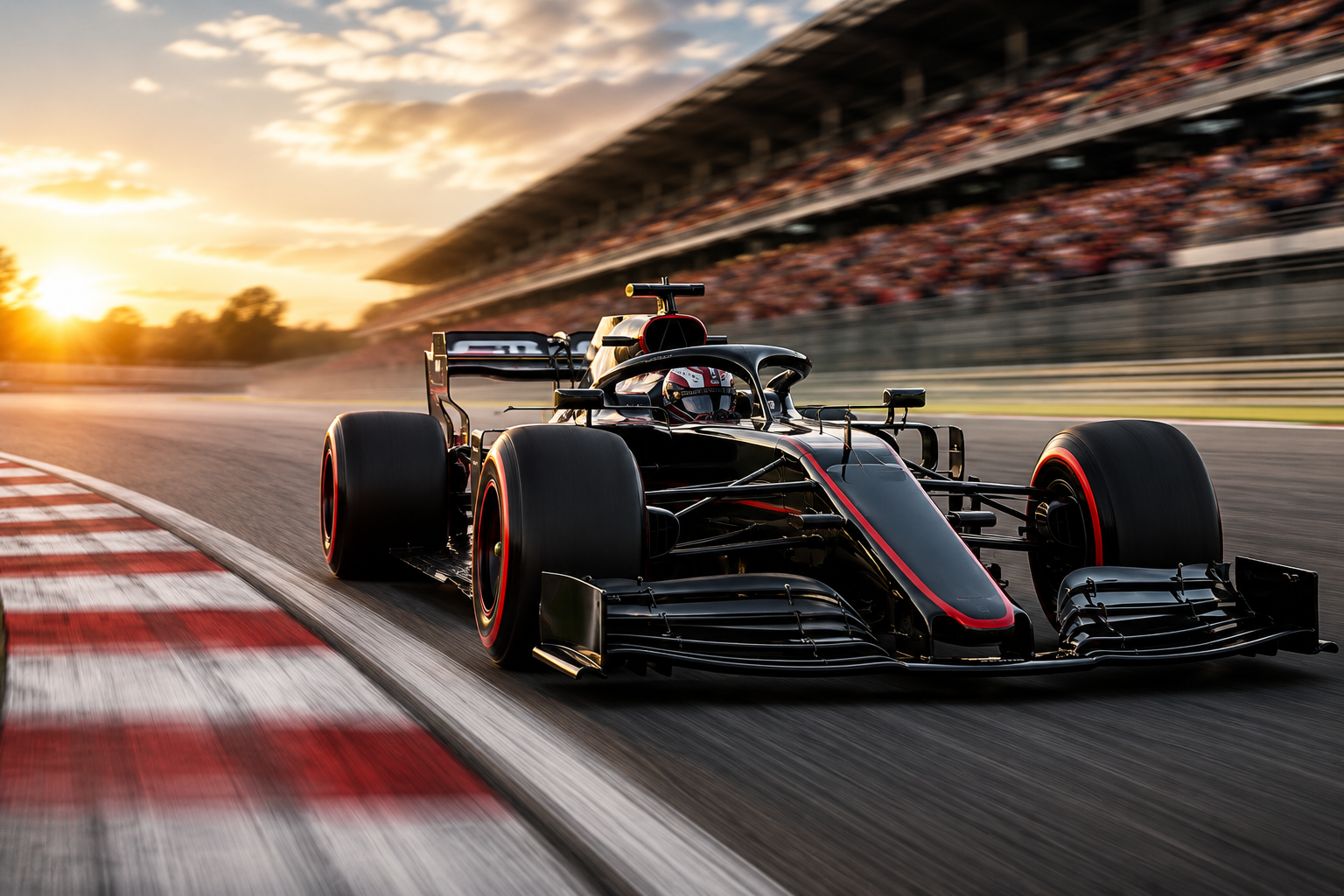
Why is Formula 1 so popular? The answer goes far beyond cars racing at more than 300 km/h. The combination of speed, technology, great rivalries, charismatic drivers, legendary circuits, and an extraordinary ability to turn every race into a spectacle has made F1 a truly global passion.
Created in 1950, the Formula 1 World Championship has spanned generations and become the premier category of global motorsport. The Fédération Internationale de l’Automobile (FIA) itself defines Formula 1 as the pinnacle of single-seater competition and highlights its role in the development of automotive and safety technologies.
And the numbers help explain the scale of this phenomenon. In 2025, Formula 1 reported reaching a global fan base of 827 million fans, 63% larger than in 2018. In the same year, approximately 6.7 million people attended races at circuits throughout the season, setting a new record for cumulative attendance.
But how did a motorsport championship manage to win over so many people?
There are at least eight major reasons.
1. Formula 1 combines speed, risk, and skill
The first explanation for understanding why Formula 1 is so popular lies in the very essence of the competition.
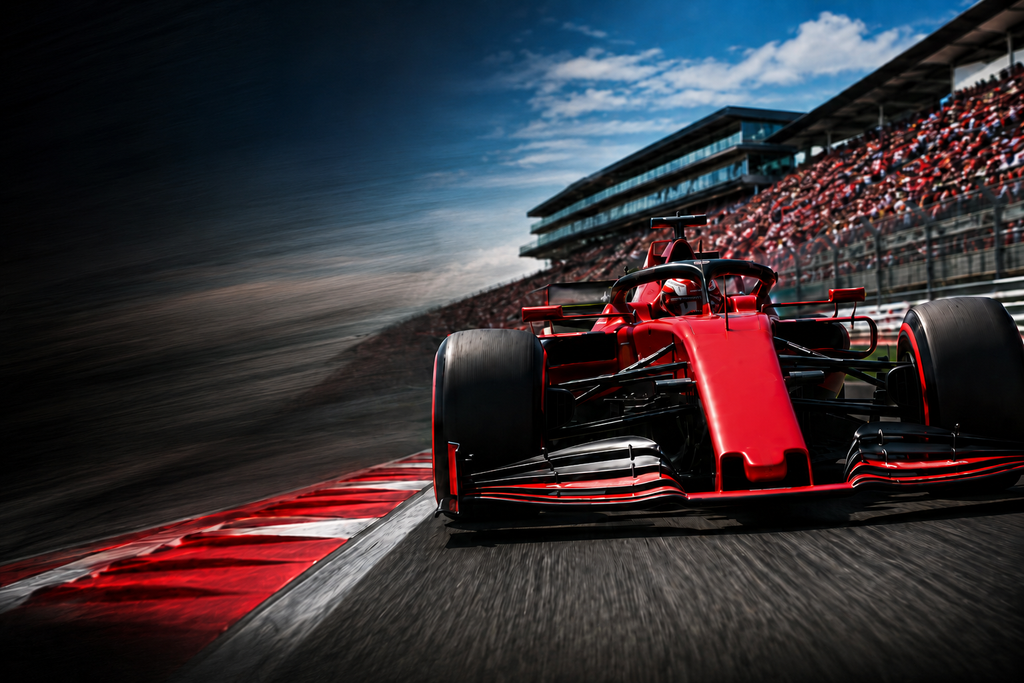
F1 pushes drivers and machines to extreme levels of performance. On every lap, tiny differences in braking, acceleration, racing line, and decision-making can determine who wins and who misses the podium.
For spectators, this creates a powerful combination: speed + unpredictability + human skill.
But driving a Formula 1 car is about much more than accelerating. A driver must manage tires, energy, temperature, strategy, traffic, and communication with the team while fighting for position at extreme speeds.
A mistake of just a few centimeters can change an entire race.
It is precisely this tiny margin between control and error that turns every Grand Prix into a spectacle.
2. Drivers become heroes and icons
Formula 1 history has also been built by remarkable personalities.
Juan Manuel Fangio, Ayrton Senna, Alain Prost, Michael Schumacher, Lewis Hamilton, and many others transcended the boundaries of motorsport and became international sporting icons.
For Brazilian fans, Ayrton Senna perhaps represents the most powerful example of this connection.
For years, millions of Brazilians woke up early on Sundays to watch his races. His victories, rivalries, and personality helped Formula 1 transcend the racetrack and become part of Brazilian popular culture.
And that sense of identification remains essential to the sport.
Fans do not follow only cars or teams. They choose drivers, follow their careers, celebrate their achievements, and debate their decisions.
This creates something essential for any mass-appeal sport: emotional connection.
3. Rivalries have turned races into unforgettable stories
Great sports need great rivalries.
And few sports have produced as many as Formula 1.
Senna vs. Prost. James Hunt vs. Niki Lauda. Schumacher vs. Häkkinen. Hamilton vs. Verstappen.
When two great drivers battle for a championship, every race becomes a new chapter in a larger story.
It is not just an overtake.
It is an overtake on the main championship rival.
It is not just a pole position.
It is the opportunity to start ahead of the rival who could decide the title.
This narrative keeps fans engaged throughout an entire season and turns seemingly small events into historic moments.
4. Formula 1 is also a technology competition
In F1, the competition is not only between drivers.
A genuine engineering war is taking place behind the scenes.
Aerodynamics, power units, energy recovery, materials, tires, cooling, suspension, software, simulation, and data analysis can make the difference between victory and defeat.
That is why engineers are almost as important as drivers.
Historically, the category has served as a laboratory for technological development. The FIA highlights that technologies developed or refined in top-level motorsport have ultimately found applications in road cars.
The 2026 season reinforced this characteristic even further. The new regulations introduced a much greater balance between electric power and combustion, active aerodynamics, and advanced sustainable fuel. The FIA also highlighted improvements in safety and efficiency as pillars of this new generation.
This means that watching Formula 1 also means seeing some of the world’s most advanced automotive technologies competing on track.
5. Strategy can be as important as speed
Imagine that the fastest car does not always win.
That is another characteristic that makes Formula 1 fascinating.
Teams must decide when to change tires, which compound to use, when to attack, when to conserve the car, and how to react to Safety Cars, changing weather conditions, and their rivals’ decisions.
A pit stop made a few laps earlier or later can decide a victory.
In certain situations, a driver who appears far behind the leader may be running a completely different strategy and, minutes later, take the lead.
That is why every race features two battles happening at the same time:
one on the track and another in the pits.
The more fans understand this strategic dimension, the more details they begin to follow during a Grand Prix.
6. The circuits turn Formula 1 into a global spectacle
Formula 1 does not take place in just one country.
The championship travels across different continents, combining historic circuits, modern tracks, and street races in some of the best-known destinations on the planet.
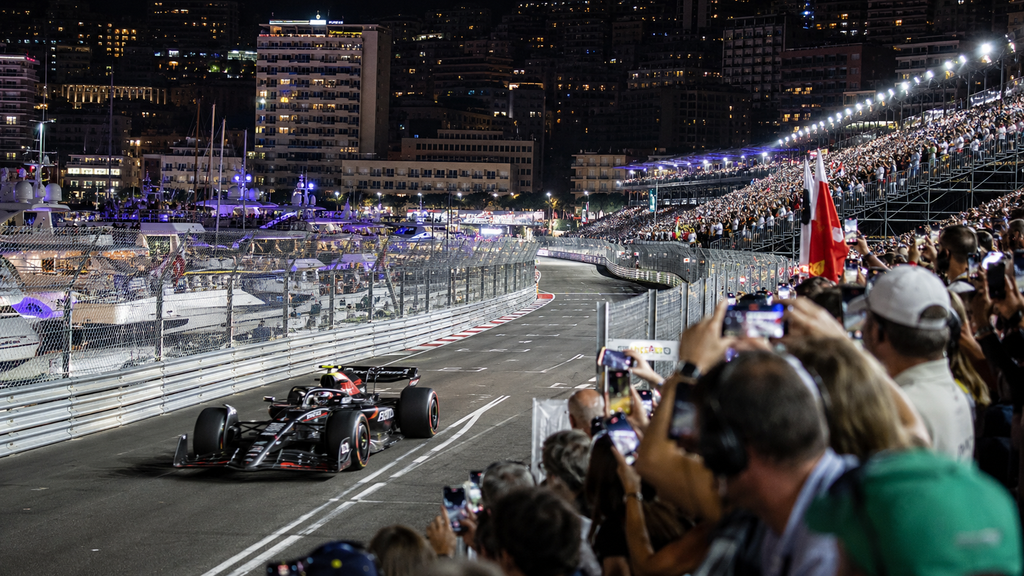
Monaco represents glamour and tradition.
Monza carries decades of Italian motorsport history.
Silverstone is directly linked to the origins of the championship.
Suzuka is renowned for its technical layout.
Interlagos holds a special place in the history of the category and has been the stage for memorable championship deciders.
This variety creates a characteristic that is difficult to replicate in other sports: each round has its own identity.
The scenery changes. The weather changes. The track layout changes. The culture changes.
And the challenges for cars and drivers change as well.
It is essentially a traveling world championship.
7. Social media and entertainment created a new generation of fans
One of the biggest recent transformations directly helps explain why Formula 1 is so popular today.
For decades, following F1 mainly meant watching race broadcasts.
Today, the experience continues throughout the entire week.
Behind-the-scenes footage, interviews, short videos, driver radio messages, memes, analysis, documentaries, and social media content have brought fans closer to the teams and competitors.
The numbers show the scale of this change. In 2025, Formula 1 reported reaching 107.6 million followers across its social platforms, representing 21% growth in one year. Views of race highlights on YouTube also increased by 30%.
The audience profile changed along with it.
Of the 827 million global fans counted by F1 in 2025, 43% were under the age of 35, while women already represented 42% of the global fan base. Among the new fans gained that year, 57% were under 35 and 48% were women.
Formula 1 has therefore managed to do something essential for its longevity: attract new generations without abandoning its history.
8. In Formula 1, no two races are exactly the same
Perhaps one of the category’s greatest strengths is unpredictability.
Rain.
Crashes.
Safety Car.
Mechanical problems.
Pit stop mistakes.
Strategy changes.
Unexpected overtakes.
A race that appears completely under control can change dramatically within just a few laps.
There is another fundamental element as well: different circuits favor different characteristics in the cars.
A team that dominates at one track may struggle at the next round.
It is precisely this combination of technical preparation and unpredictable events that keeps millions of people watching until the checkered flag.
Formula 1 popularity in numbers
If there is still any doubt about the current scale of the category, the numbers help put it into perspective.
According to data released by Formula 1 for 2025:
- 827 million fans around the world;
- growth of 63% in the fan base since 2018;
- 43% of fans are under 35;
- 42% of the global fan base is female;
- 6.7 million spectators attended circuits during the season;
- 19 of the 24 events in 2025 were sold out;
- the British Grand Prix welcomed approximately 500,000 people over the weekend.
These figures show that Formula 1 does not rely solely on its history. The category continues to expand its audience.
The future of Formula 1 is driven by technology and sustainability
The ability to reinvent itself also helps explain F1’s longevity.
The category entered a new technical era in 2026, with significant changes to the cars and power units. Among the guidelines established by the FIA are a greater contribution from electric power, active aerodynamics, and the use of advanced sustainable fuel.
Formula 1 itself has also set a target of achieving Net Zero Carbon by 2030.
This preserves a characteristic that has been present since the early decades of the competition: F1 must keep changing in order to remain relevant.
After all, why is Formula 1 so popular?
There is no single answer.
Formula 1 brings together elements that are usually found separately in different sports: speed, skill, technology, strategy, rivalry, risk, money, engineering, personalities, and entertainment.
One fan may follow the sport because of a driver.
Another may be passionate about engineering.
Another follows Ferrari, McLaren, Mercedes, or another team.
Some are fascinated by strategy, while others simply want to watch twenty cars fight for position at extremely high speeds.
This diversity may be the best answer to why Formula 1 is so popular.
More than seven decades after the World Championship began, F1 has managed to preserve its history while finding ways to win over an entirely new generation of fans.
And as long as there are drivers willing to push the limits, engineers searching for thousandths of a second, and fans waiting for the next overtake, Formula 1 will continue to be much more than a car race.
It is sport, technology, strategy, and spectacle happening all at once.